
Sooner or later someone will tell you your restaurant needs "schema markup". Maybe a web designer, maybe an agency cold-calling you on a Tuesday afternoon. It sounds technical, and the people selling it often like it that way.
The idea itself is simple, and you don't need to understand any code to make good decisions about it. This is the owner's version.
What it is, in one paragraph
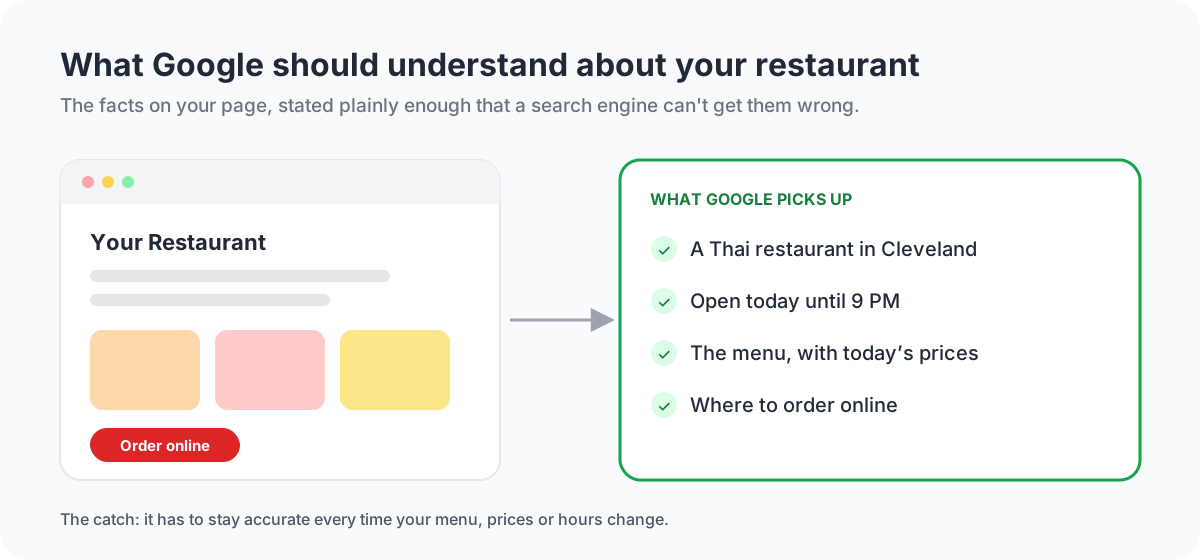
When you look at your website, you instantly see that it's a restaurant, that it closes at nine and where to order. A search engine has to work that out by reading the page, and it doesn't always get it right. Schema markup (or structured data, same thing) is extra information tucked into your web pages that states those facts plainly for search engines: what kind of place you are, where you are, when you're open, what's on the menu and how to order. Your customers never see it.
What it does for you, and what it doesn't
Done well, it helps Google trust the facts about your restaurant and use them correctly. It can also make your pages eligible for richer listings in search results.
What it won't do is put you on page one by itself. Ranking still comes down to the basics we cover in our restaurant SEO guide: a complete Google Business Profile, a menu people and search engines can read, and reviews. If someone is selling you schema markup as the secret to beating the place down the street, keep your wallet closed.
The mistakes that actually cost restaurants
You don't need to read code to spot most problems. They're nearly always one of these.
It's out of date. Someone set it up when the website launched. Since then you've changed your hours twice and raised half your prices, but the hidden information still says the old thing. Now Google is hearing two different stories about your restaurant.
It doesn't match the page. Search engines expect the hidden information to say the same thing your visitors see. When it doesn't, they tend to ignore it, and Google treats it as going against its guidelines.
It describes the wrong kind of business. A bakery set up as a generic shop, or a grocery store described as a restaurant. It sounds minor, but it muddies what you should show up for.
It's padded with self-praise. Some setups add the restaurant's own star rating. Google doesn't show stars a business gives itself on its own website, so it's wasted effort at best.
Nobody has checked it in years. Google has free tools that test a page and flag problems. If no one has run your site through them since it was built, it's worth asking someone to.
Why "set it up once" doesn't work for restaurants
Restaurants change all the time. Specials come and go, prices move, holiday hours appear and disappear, dishes sell out. Anything typed in by hand goes stale the same way a PDF menu does. The only setup that stays right is one that's tied to the same menu and hours your customers see, so a change in one place updates everything at once.
Questions to ask your website or ordering provider
- Do our pages tell search engines about the restaurant, our hours and our menu?
- When I change a price, a dish or our hours, does that update on its own?
- Does it describe us as the right kind of business?
- Has it been tested with Google's tools recently, and what did the test say?
- If we have more than one location, is each one set up separately?
If the answers are vague, or involve paying someone every time your menu changes, that tells you something.
How it works with NEAPES
You don't have to think about it. NEAPES ordering websites take care of the search-engine side for you and keep it in step with your live menu, hours and prices. Change something in your system and the website and what Google reads change together, with nothing to edit and nothing to remember. See NEAPES online ordering, or book a demo and we'll walk you through it with your own menu.
Frequently asked questions
What is schema markup, in plain English?
It's extra information in your web pages, invisible to customers, that tells search engines the key facts about your restaurant: what kind of place it is, where it is, when it's open, what's on the menu and how to order.
Will schema markup get my restaurant to the top of Google?
Not on its own. It helps search engines understand and trust your information, but rankings still depend on your Google Business Profile, your website and your reviews.
Do I need to understand code to get it right?
No. What matters is that it's accurate, matches your website and updates when your menu or hours change. Ask your website or ordering provider how they handle that.
How do I know if mine is working?
Ask whoever runs your website to test a few pages with Google's free testing tools and share the results. Re-test after any big change to your hours, menu or site.
Does NEAPES handle this for me?
Yes. NEAPES ordering websites take care of it automatically and keep it in step with your live menu, hours and prices.
Tagged: