
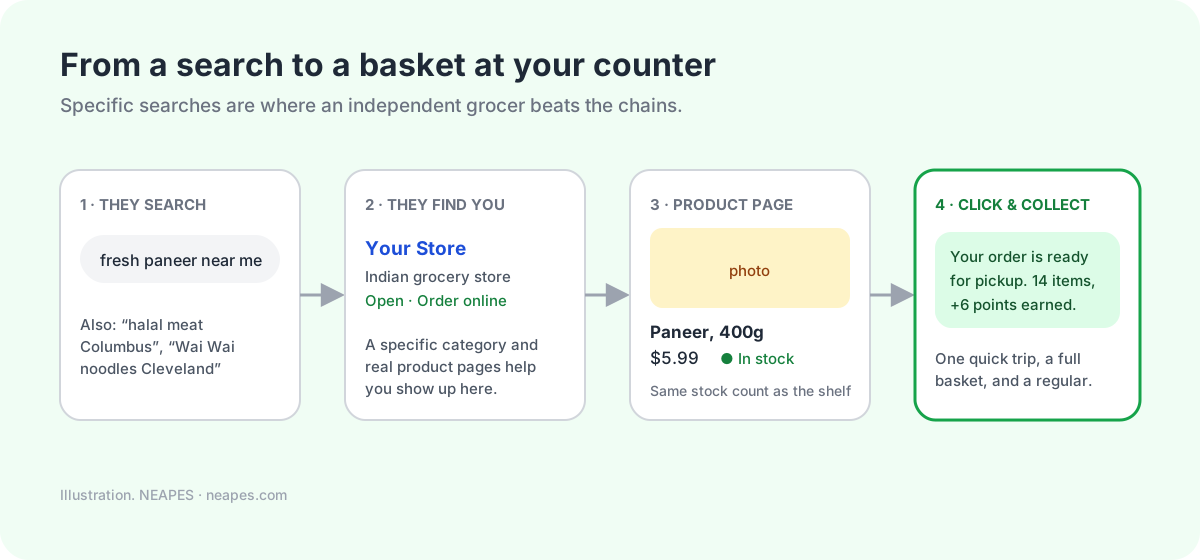
If you run an independent grocery store, you're not going to outrank Kroger for "grocery store". You don't need to.
The searches that send people to a store like yours are much more specific: "indian grocery near me", "halal meat columbus", "where to buy wai wai noodles", "fresh paneer cleveland". The people typing those already want what you sell. They just don't know you sell it yet. Those are the searches worth going after.
Write down what people can't get at the supermarket
Before you touch any settings, sit down and list what people come to you for that the big chain down the road doesn't do well. It might be a cuisine or a community: Nepali, Indian, Korean, Mexican, Middle Eastern, West African, Polish. It might be a category, like halal meat, produce from a particular region, spices in bulk or frozen momos. It might be brands people search for by name. Or a service, like catering trays or local delivery.
That list is your keyword list. The rest of this post is about getting those words in the right places.
Set up your Google profile like a specialist
Pick the most specific primary category Google offers. "Indian grocery store" or "Asian grocery store" will do far more for you than plain "Grocery store". Write a description that names your specialties and mentions that people can order online for pickup or delivery.
Then add photos that prove you stock what people are looking for: the spice aisle, the produce, the freezer section, the shelf of imported snacks, and the front of the store so people recognize it when they pull up. Use Google posts for new arrivals, and for festival stock in the weeks before Diwali, Dashain, Eid, Lunar New Year or Christmas, when people are actively searching. And add a link to your online shop.
Our Google Business Profile guide is written for restaurants, but nearly all of it applies to a grocery store too.
Give every product its own page
This is where selling online helps your SEO directly. A brochure website might have five pages. An online shop has a page for every product you sell, and each one can turn up when someone searches for that product nearby.
For that to work, each product needs a clear name with brand, product and size ("Wai Wai Instant Noodles, Chicken, 75g", not "WW noodle chkn"), a real photo, an accurate price, and a sentence or two on what it is and how people use it. Group products into category pages like "Spices", "Rice and lentils" and "Frozen". They help people browse, and they help search engines understand what you carry.
Behind the scenes, a good online shop also tells search engines each product's price and whether it's in stock. That's something your provider should handle for you. If you're not sure what to ask them, here's what owners need to know.
Your stock count is an SEO problem too
Here's a situation nobody wants. Someone finds your paneer on Google and drives across town for it, or orders it online, and it's been out since Tuesday. You've lost the sale, you're refunding the order, and you've probably earned a review about it.
If your online shop reads the same stock count as your registers, that doesn't happen. When the last pack sells at the counter, it disappears from the website. What Google sends people to is what's actually on the shelf.
Reviews from the people you serve
Customers who drive a long way for your store write the most useful reviews there are. "The only place in Akron with fresh curry leaves" will help the next person searching for curry leaves more than any amount of SEO work. Ask for reviews at the register and in the order-ready message, and reply to all of them, in the customer's language when you can.
Click-and-collect suits specialty grocery
For a specialty grocer, online ordering solves a real problem. Plenty of your customers live a long way off. Letting them build the whole basket at home and make one quick trip to collect it makes you much easier to shop with. Baskets tend to grow too, because people browsing your full catalog at home remember things they'd have walked straight past in the aisle. Festival weeks get calmer when orders are picked ahead instead of everyone turning up at once. And loyalty points that work online and in store give regulars one more reason not to drift to a chain.
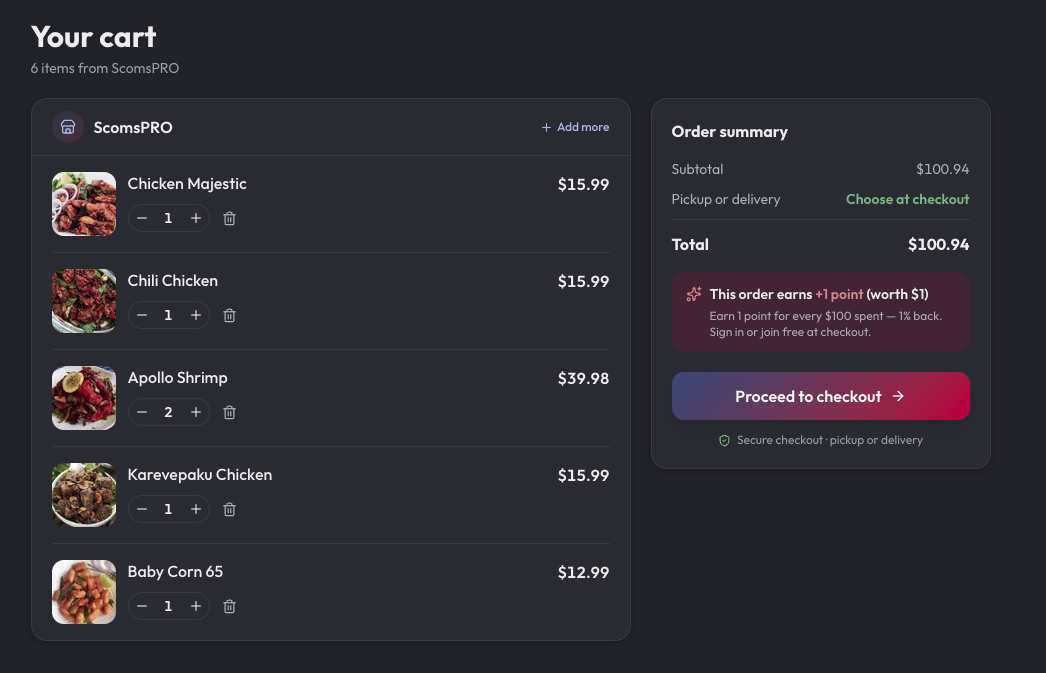
More on this in how your own ordering website increases profit.
A checklist to work through
- A specific primary category, and a description that names your specialties.
- The same name, address and phone on Google, your website, Apple Maps, Facebook and Yelp.
- An online catalog with a page for each product: name, brand, size, photo, price.
- Category pages for your specialty sections.
- Online stock that matches the shelf.
- A review request at the register and in order messages.
- Posts for new arrivals and festival stock.
- An order link on your Google profile, pointing at your own shop.
NEAPES gives grocery and convenience stores their own online shop connected to the POS. The shelf and the website share one stock count, and you get pickup and local delivery, batch and expiry tracking, loyalty, and fast product and category pages built to be found on Google. It's $45 a month plus a 4% platform fee per online order. Have a look at grocery online ordering, or if you're in Ohio, talk to our local team.
Frequently asked questions
How can a small grocery store rank on Google?
Go after specific searches rather than "grocery store": your cuisines, your specialty categories and the products people search for by name. Use a specific Google profile category, give each product its own page with an accurate price and stock, and collect reviews.
Which Google category should an ethnic grocery store use?
The most specific one that fits, like "Indian grocery store" or "Asian grocery store", with secondary categories for anything else you genuinely are, such as a halal market.
Do product pages really help a grocery store's SEO?
Yes. A product page with a clear name, brand, size, photo and price can show up when someone nearby searches for that product, and Product markup helps search engines understand its price and availability.
Is online ordering worth it for a small grocery store?
For specialty and ethnic grocers especially. Customers who live far away can order a full basket for pickup, baskets tend to be bigger, and loyalty keeps regulars coming back. The key is keeping online stock in sync with the shelf.
Tagged: